
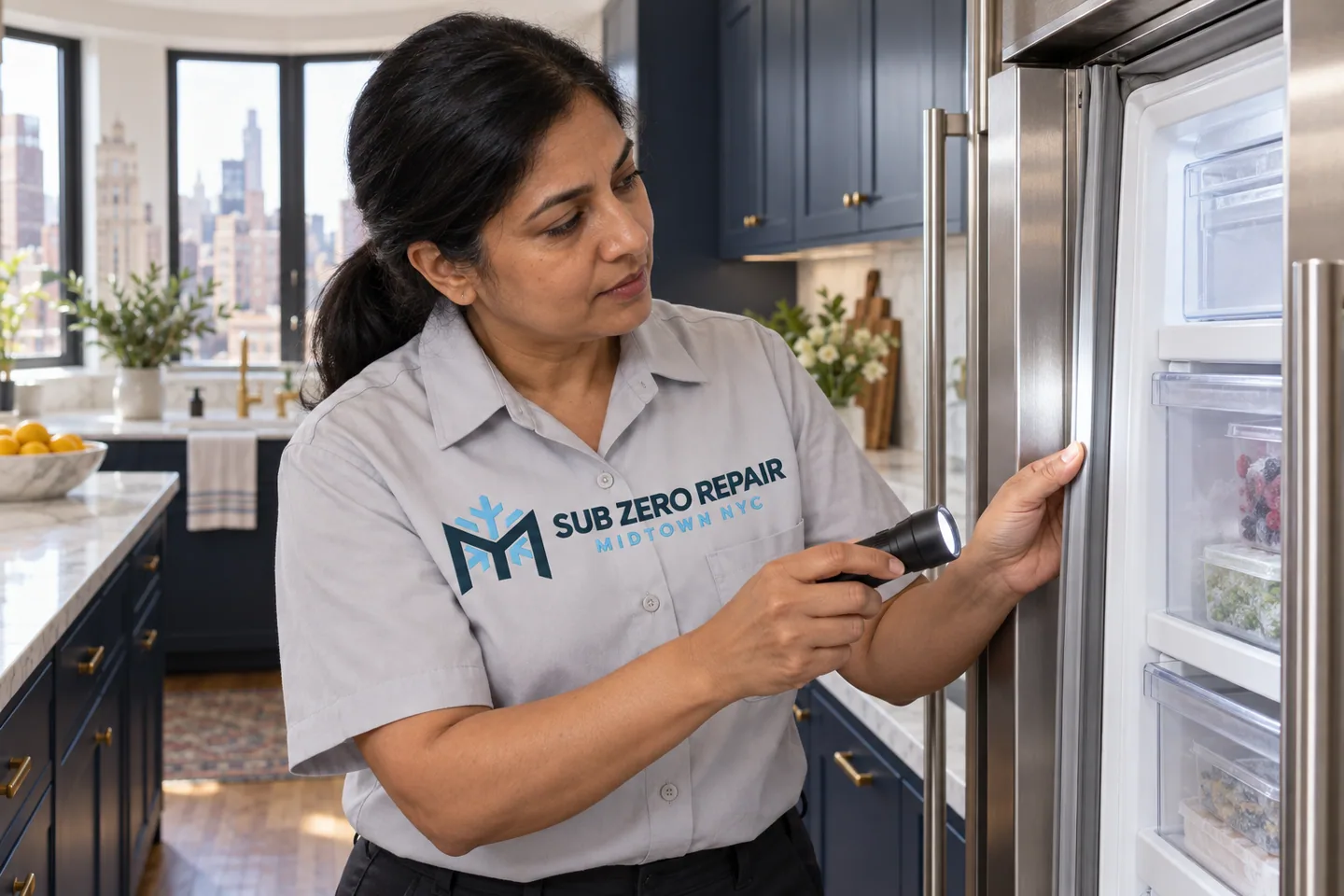
Photograph the pattern before changing it
A picture of frost around the door or inside a drawer may be more useful than “it is all iced up.” Do not chip ice, pry frozen panels or use a hair dryer to create access. Those actions can damage the appliance and remove the condition that needs assessment.
Move an obvious loose package if it blocks normal closure. A door that still catches after the path is clear needs to be described without adjusting its hinges or gasket.
Identify a compartment or an independent appliance
A refrigerator-freezer and a separate freezer column may look similar behind matching doors. Use the freezer's own model where it is safely accessible. If one cabinet contains both chilled and frozen storage, say which portion has changed.
Record any alert before clearing it. Repeatedly lowering the setting does not establish why freezing is unreliable. Arrange appropriate alternative storage for affected contents while discussing service.
Prepare the space in front
Keep the appliance installed and leave room for its door or drawers to open. Explain apartment entry restrictions when calling 212-540-2172. The service conversation covers availability, diagnostic charges and the person authorized to approve proposed work.
A FEW HELPFUL ANSWERS
Before your service visit
Should I defrost everything before calling?
First preserve the observations and discuss guidance for the exact model. Do not start an improvised defrosting procedure to test a suspected part.
Does frost always mean a temperature failure?
Frost location, door behavior and the condition of stored items need to be considered together. A photograph alone cannot establish the cause.